

Cybercriminals know that the easiest way into a company isn’t through firewalls or code — it’s through people. Phishing and credential theft remain two of the most common methods used to compromise corporate networks, and even the best technology can’t stop an employee from accidentally clicking a malicious link.
The good news? With proper education and regular awareness training, employees can become a company’s strongest line of defense instead of its weakest point.
Understanding Credential Theft and Phishing
Credential theft occurs when attackers steal usernames, passwords, or authentication tokens to gain unauthorized access to systems. Phishing, on the other hand, is the method often used to make that happen — tricking employees into revealing sensitive information through deceptive emails, fake websites, or text messages.
Modern phishing campaigns have grown increasingly sophisticated, often mimicking trusted brands, executives, or vendors. A single successful phishing attempt can lead to data breaches, financial loss, and reputational damage. That’s why employee training isn’t optional — it’s essential.
Steps to Train Employees Effectively
- Start with Real-World Examples
Use recent phishing incidents and real case studies to show employees how easily credentials can be stolen. Relatable examples make the risks tangible and memorable.
- Teach the Red Flags
Employees should learn to spot the telltale signs of phishing:
- Urgent or threatening language (“Your account will be suspended!”)
- Suspicious sender addresses or domain names
- Unusual attachments or links
- Requests for login credentials or sensitive data
- Run Simulated Phishing Campaigns
Testing is training. By sending simulated phishing emails, organizations can measure employee readiness and identify who needs more guidance — without any real risk.
- Encourage a “Pause Before You Click” Culture
Empower employees to question suspicious messages instead of rushing to respond. Encourage them to verify with IT before taking action.
- Keep Training Continuous
Cyber threats evolve, and so should your training. Quarterly refreshers and ongoing micro-learning sessions help maintain awareness year-round.
The Role of AI and Threat Intelligence
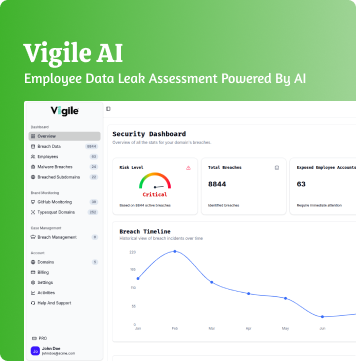
Modern cybersecurity goes hand in hand with intelligent automation. Platforms like Vigile.AI leverage AI-powered monitoring to detect suspicious behavior, credential misuse, and phishing attempts across networks.
By integrating human awareness with AI-driven defense, companies can create a layered security approach — one that combines proactive detection with an informed, vigilant workforce.
Build a Security-First Culture with Vigile.AI
Your employees are the first and most important firewall. When properly trained, they can recognize threats before they turn into breaches.
At Vigile.AI, we empower organizations to strengthen their cybersecurity posture through AI-driven threat detection and dark web monitoring. Our intelligent systems alert you when employee credentials are exposed and help you act before attackers strike.
Turn awareness into action — partner with Vigile.AI to build a smarter, more secure future.
👉 Learn more at Vigile.AI.