
Introduction
Most organizations focus heavily on preventing data breaches. But very few ask the question that matters just as much: what actually happens after credentials are stolen?
The answer is faster, more organized, and more damaging than most people expect. Understanding the timeline of a credential breach isn’t just interesting, it’s essential for knowing how much time you actually have to respond.
Hour 0: The Breach Happens
It starts silently. A phishing email gets clicked. Malware runs in the background. A third-party service your employee signed up for gets compromised. In most cases, nobody notices anything. No alarms. No alerts. Business continues as usual.
The credentials, usernames, passwords, and sometimes session tokens are harvested and collected by the attacker.
Hours 1–24: Data Gets Packaged and Moved
Within hours, stolen credentials are compiled into structured files. Attackers organize them by domain, email provider, or company, making them easy to sort and sell. This data is then moved to private channels, encrypted file shares, or dark web staging areas.
At this point, the data hasn’t been used yet. It’s being prepared.
Days 1–3: It Hits the Dark Web
Within 24 to 72 hours, fresh credential dumps begin appearing on dark web forums and marketplaces. Some are sold privately to the highest bidder. Others are posted publicly in large combo lists, which are massive files containing millions of username and password pairs.
Your employees’ credentials may now be in the hands of dozens of different threat actors simultaneously, many of whom you’ll never be able to trace.
Days 3–7: Credential Stuffing Attacks Begin
This is where things escalate quickly. Automated tools start testing stolen credentials across hundreds of platforms including corporate email, Slack, cloud storage, banking portals, and internal tools. This is called credential stuffing, and it’s remarkably effective because most people reuse passwords.
A single leaked password from a forgotten e-commerce account can unlock your company’s entire cloud infrastructure.
Week 2–4: Unauthorized Access Goes Undetected
Here’s the most chilling part of the timeline. The average organization takes over 200 days to detect a breach. By the time IT notices something is wrong, attackers may have already been inside the system for weeks, reading emails, exfiltrating files, mapping infrastructure, and escalating privileges quietly.
This is the phase where the real damage is done. Not at the moment of breach, but in the long silence that follows.
Months Later: The Full Impact Surfaces
Eventually the breach becomes visible through a ransomware attack, a compliance audit, a customer complaint, or a news report. By this point the financial damage, reputational harm, and regulatory exposure are already locked in.
The average cost of a data breach in 2024 exceeded $4.8 million. A significant portion of that comes not from the breach itself, but from how long it went undetected.
So What’s the Window to Act?
The honest answer is 72 hours or less.
That’s roughly the window between when credentials are stolen and when they start being actively exploited. After that, you’re no longer preventing a breach, you’re managing the aftermath.
The only way to act within that window is to know the moment your credentials surface, not days or weeks later.
How Vigile.AI Fits Into This Timeline
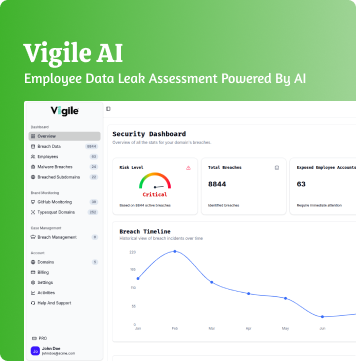
Vigile.AI monitors dark web forums, credential dumps, paste sites, and malware logs in real time across 300B+ leaked records. The moment your employees’ credentials appear anywhere in that ecosystem, you get alerted.
That’s the difference between catching a threat at Hour 48 versus discovering it at Month 7. Check your company’s exposure for free at vigile.ai
Conclusion
A data breach doesn’t end the moment credentials are stolen. In many ways, that’s just the beginning. The real damage unfolds over days, weeks, and months, most of it invisible to the organizations being targeted.
Understanding this timeline is the first step to shortening it. And shortening it is the difference between a close call and a catastrophe.