
Introduction
When a data breach makes the news, the headlines usually focus on one number. How many records were stolen. How many customers were affected. How many millions the company was fined.
But those numbers only tell part of the story. The real cost of a credential breach goes far deeper than what gets reported, and for most organizations, the damage that never makes the headlines is the damage that hurts the most.
The Obvious Costs Everyone Talks About
There are costs that are easy to quantify and easy to report. Regulatory fines under frameworks like GDPR, HIPAA, or CCPA can run into millions depending on the size of the breach and how it was handled. Legal fees from class action lawsuits pile up quickly. Incident response teams, forensic investigators, and crisis communications consultants do not come cheap.
The average cost of a data breach globally reached $4.88 million in 2024 according to IBM’s annual Cost of a Data Breach Report. For large enterprises, that number climbs significantly higher.
These are real costs. But they are only the beginning.
The Cost of Downtime
When a credential breach escalates into a full system compromise, operations stop. Employees get locked out of systems. Customer-facing services go offline. Internal tools become inaccessible while teams scramble to contain the damage.
Every hour of downtime has a direct dollar value. For mid-sized businesses it can run into tens of thousands per hour. For enterprises it can reach hundreds of thousands. And unlike a fine that arrives weeks later, downtime hits immediately and relentlessly.
The Cost Nobody Budgets For: Productivity Loss
While the incident response team works the breach, the rest of the organization does not simply carry on as normal. Employees across departments get pulled into investigations, password resets, system audits, and compliance reviews. Leadership time gets consumed by board briefings, legal consultations, and regulator communications.
This productivity drain is rarely captured in breach cost estimates, but it is very real. Weeks of organizational focus shift away from growth and toward damage control.
The Reputational Cost
This is the one that keeps executives up at night, and rightfully so.
Trust takes years to build and can collapse in days after a breach becomes public. Customers cancel subscriptions. Partners pause contracts. Prospective clients choose competitors. Investors reassess risk.
A study by Ponemon Institute found that companies lose an average of 5 percent of their customer base following a publicly disclosed breach. For a business with strong recurring revenue, that churn compounds painfully over time.
Unlike a fine, you cannot simply pay your way out of reputational damage. It has to be rebuilt slowly, expensively, and with no guarantee of full recovery.
The Cost of Remediation and Infrastructure Overhaul
After a breach, organizations rarely just patch the hole and move on. Regulators, auditors, and boards demand comprehensive security overhauls. That means new tools, new policies, new training programs, and sometimes entirely new infrastructure.
These projects are expensive, time-consuming, and disruptive. And they almost always cost significantly more than the proactive security investment that could have prevented the breach in the first place.
The Long Tail: Cyber Insurance and Borrowing Costs
Something few organizations consider until it hits them is how a breach affects their financial profile going forward. Cyber insurance premiums increase dramatically after a claim. Some insurers refuse to renew policies altogether.
For publicly traded companies, a breach can affect stock price, credit ratings, and borrowing costs for years. The financial ripple effects extend well beyond the immediate incident.
The Hidden Cost of Delayed Detection
Perhaps the most painful cost multiplier is time. The longer a breach goes undetected, the worse every single one of these costs becomes. More data gets exfiltrated. More systems get compromised. More customers are affected. More regulators get involved.
IBM’s research consistently shows that breaches with a lifecycle under 200 days cost significantly less than those that go undetected longer. Every day of delay adds to the final bill.
This is why early detection is not just a security priority. It is a financial one.
What Proactive Monitoring Actually Saves You
When you reframe credential monitoring as a cost-saving investment rather than a security expense, the math becomes very clear.
Catching a credential breach in hour 48 versus month 7 is not just operationally better. It is potentially millions of dollars cheaper. It is the difference between a contained incident and a company-defining crisis.
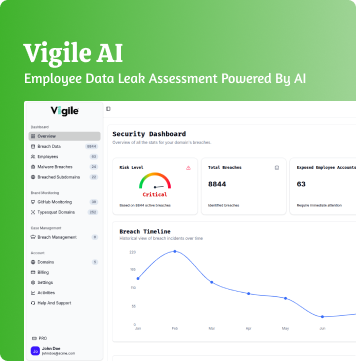
Vigile.AI monitors 300B+ leaked records in real time, alerting your team the moment employee credentials surface on the dark web, before attackers can act on them.
Check your company’s exposure for free at vigile.ai
Conclusion
The headline number after a breach is never the whole story. The real cost lives in the downtime, the lost customers, the rebuilding, the insurance hikes, and the years of reputational repair that follow.
The good news is that most of these costs are preventable. Not by spending more after a breach, but by detecting it earlier. Because in credential security, speed is not just an advantage. It is everything.